


El oro subíó a $4,156 por onza el 15 de octubre, con un alza del 1.23% respecto al día anterior, extendiendo una recuperación que ha visto al metal precioso ganar un 2.4% en la última semana. El avance se produjo a pesar de un dólar más firme al principio de la sesión, lo que sugiere que otros factores están respaldando firmemente el mercado. El oro ahora ha subido durante tres sesiones consecutivas, with buyers stepping in at each pullback to defend short-term moving averages. El ascenso también reflects renewed safe-haven demand amid persistent geopolitical uncertainty across multiple regions.
La ganancia follows a US producer inflation report that came in cooler than expected, easing concerns about aggressive Federal Reserve rate hikes. El índice de precios al productor subió menos de lo previsto en septiembre, marking the softest reading in five months and reinforcing bets that the central bank is nearing the end of its tightening cycle. El índice of dólar cayó un 0.3% hasta 101.20, making gold cheaper for foreign buyers and boosting demand across international markets. Los rendimientos del Tesoro también descendieron, with the 10-year note slipping below 4.00% for the first time since August, further easing the opportunity cost of holding non-interest-bearing assets like gold.
El oro ahora se ha recuperado desde el mínimo reciente de $4,050 establecido a principios de este mes. El metal permanece up 35% year over year, though it is down 4% from the all-time high of $5,608.35 set in January 2026. La resistencia clave ahora se sitúa en $4,200, a level that drew selling interest in late September when prices briefly spiked above that mark before reversing sharply. Los técnicos del mercado señalan that a sustained close above $4,200 would be needed to confirm a breakout. El rendimiento del metal en los próximos días probablemente determinará si la recuperación actual evolves into a sustained uptrend or another failed attempt to reclaim lost ground.
Desde una perspectiva técnica, el oro está probando una zona of resistencia entre $4,150 y $4,200. A decisive break above $4,200 could open the door to a retest of $4,300. Por el contrario, un retroceso por debajo of $4,100 señalaría un retorno al rango de negociación reciente. La media móvil of 50 días en $4,130 is providing dynamic support, while the relative strength index is approaching overbought territory, suggesting the rally may be stretched in the near term. El volumen ha sido modesto during la recuperación, which some analysts interpret as a lack of conviction among institutional participants.
La plata también rallied, gaining 1.8% to $49.20 por onza. El ratio oro-plata cayó a 84.5, its lowest level in three months, suggesting silver is outperforming gold during the current bout of risk appetite. La plata ha liderado históricamente los metales preciosos during periods of economic recovery, and its relative strength is being read by some technicians as a constructive signal for the broader complex. El platino también gained ground, rising 0.9% to $1,620 por onza, while palladium added 1.2% to $1,180. The broad-based strength across the precious metals complex suggests investors are rebuilding exposure after the recent pullback.
Los analistas señalan que la fortaleza reciente del oro es algo sorprendente dado el entorno macroeconómico. Rising government deficits and elevated geopolitical tensions should be supportive, but the metal had struggled to gain traction until the latest inflation data provided a catalyst. Los rendimientos reales permanecen elevados por estándares históricos, which typically reduces the appeal of non-interest-bearing assets like gold. The fact that bullion is rising despite this headwind is seen as evidence of underlying demand from both official sectors and private investors. Some strategists believe this marks a structural shift in how the market prices monetary policy expectations.
Los flujos of inversión en ETF respaldados por oro han mejorado en las últimas semanas, reversing a multi-month trend of outflows. Los datos muestran that las tenencias globales of ETF de oro aumentaron en 12 toneladas en la semana que terminó el 12 de octubre, led by North American products. El interés minorista también has picked up, with bullion dealers reporting stronger demand for coins and small bars. This shift in positioning suggests investors are rebuilding exposure to the metal after earlier profit-taking. The return of ETF demand is particularly notable because institutional flows were a primary driver of gold's surge to record highs earlier in 2026.
El mercado of opciones muestra una mayor demanda of protección con opciones de compra en oro, with implied volatility rising to 19.2%, up from 16.8% last week. Los operadores están pagando más por exposición al alza, reflecting optimism about further gains. However, put skew remains negative, suggesting some investors are still hedging against declines. Open interest in call options at the $4,200 strike has increased notably ahead of the next consumer inflation report. This positioning suggests that while the near-term momentum favors the upside, market participants remain cautious about the sustainability of the rally.
La compra of los bancos centrales continúa proporcionando un suelo bajo el oro. The World Gold Council reported that central banks added 28 toneladas a las reservas en octubre, with China, India and Poland leading the purchases. Esto sigue a récord de compras en 2024 and 2025, when official sector demand exceeded 1,000 toneladas for consecutive years. Central bank demand has been a key structural driver of the bull market, providing consistent absorption of mine supply. The official sector's accumulation is driven by a desire to diversify away from the US dollar and hedge against geopolitical risk, a trend that shows no signs of slowing.
De cara al futuro, los datos of ventas minoristas del jueves could influence gold prices. If consumer spending comes in stronger than expected, it could boost rate pressure and weigh on precious metals. Conversely, weak retail sales could ease rate concerns and lift gold. El informe es particularmente importante porque los funcionarios of la Reserva Federal han enfatizado repetidamente that las decisiones of política will depend on incoming data. Un dato más suave reforzaría la creciente convicción of mercado de que el ciclo of endurecimiento is complete, while a stronger reading could reignite hawkish expectations and trigger another round of selling.
En general, el oro permanece en un amplio rango between $4,050 and $4,300 establecido durante el último mes. La combinación of una inflación más fría y la debilidad del dólar has provided near-term support, but sustained gains will likely require confirmation that the Fed is pausing its rate hikes. Los participantes of mercado también estarán atentos a los próximos discursos of los funcionarios of la Reserva Federal for further guidance on the policy path. El próximo índice of precios al consumidor se publica el martes siguiente and could provide the next major catalyst for directional movement.
Algunos analistas ahora apuntan a $4,500 as the next major resistance level, arguing that the combination of ETF demand and macroeconomic uncertainty could drive gold to new highs by year-end. Sin embargo, la cautela está garantizada given the metal's sharp reversal from earlier highs in 2026. Un escenario más conservador ve al oro consolidándose en el rango actual until the Fed signals a definitive end to its tightening campaign. Either way, the coming weeks are likely to set the tone for gold's performance through the fourth quarter and into 2027.
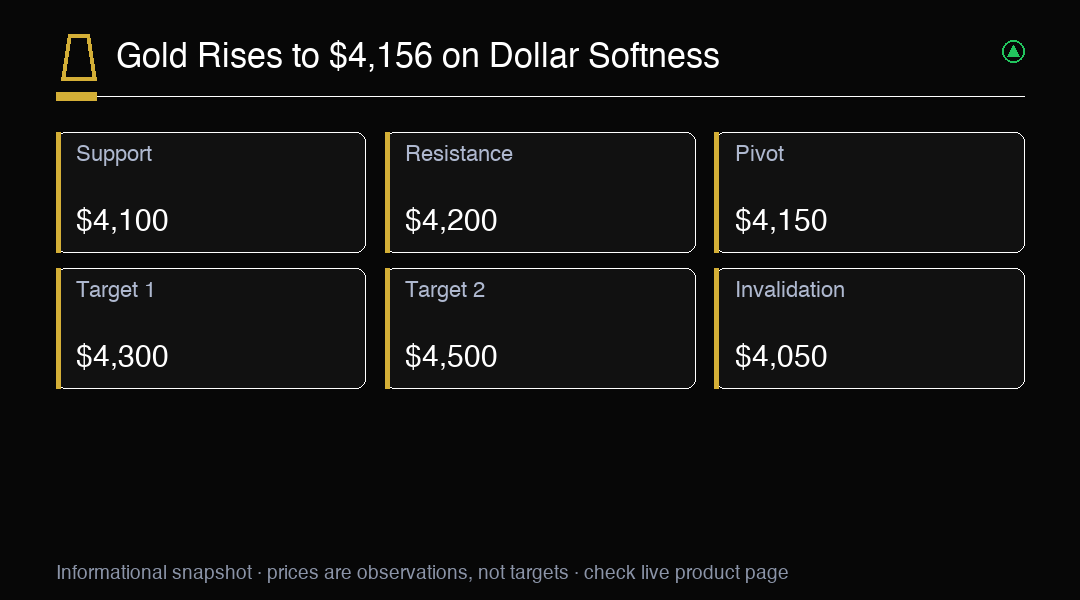
Perspectiva de trading
El oro está probando la resistencia de $4,200 después of rebotar desde el soporte of $4,050. Observe los datos of ventas minoristas del jueves. El rango se mantiene entre $4,050 y $4,300.