
What Is Liquidation? Understanding MC Markets' Liquidation Mechanics and Margin Calls
A warning at 100% margin ratio, forced liquidation at 50% — using one real position, see when the danger begins, how the system alerts you, and what you can do to save yourself.


Introduction
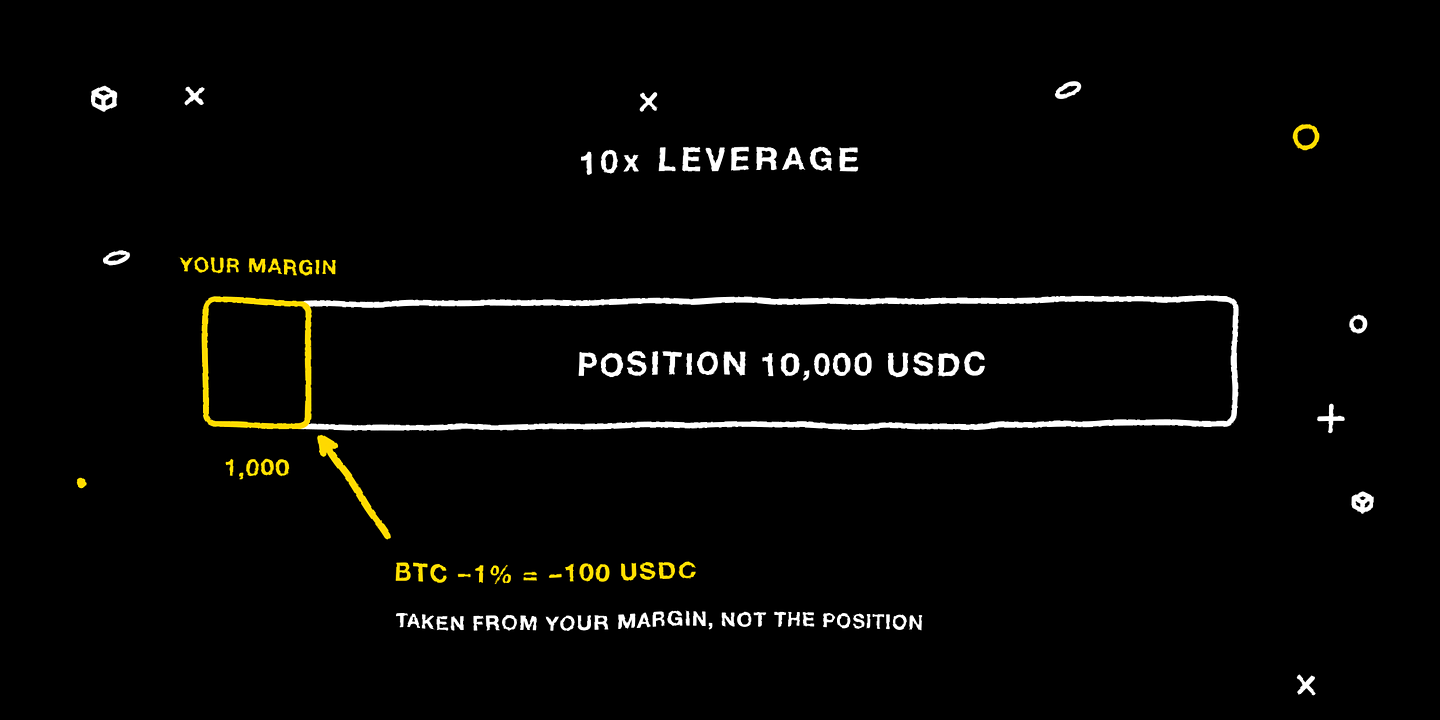
Suppose you have 1,000 USDC in your account and you go long BTC at 10x leverage, opening a 10,000 USDC position. BTC starts to fall — how far does it have to drop before the system forcibly closes your position?
That's the question “liquidation” (also called forced liquidation or a blow-up) answers. This article uses that one position to walk you through the whole journey from “safe” to “warning” to “liquidation.”
1. What Is Liquidation?
Liquidation, commonly called forced liquidation or a blow-up, is the mechanism by which the system automatically closes your position — to prevent losses from expanding further — when your margin is no longer enough to support the position's losses.
Why is this mechanism needed? Because in leveraged trading, you put up only part of the money (the margin) yet control a larger position. It's like renting an apartment: you pay a 1,000 deposit to move in, and if the damage you cause exceeds the deposit, the landlord won't wait — they'll take the apartment back directly. The margin is your deposit; liquidation is the moment the “apartment is taken back.”
Back to the opening example: your 1,000 USDC is the deposit, and the 10,000 USDC BTC position is the apartment. For every 1% BTC falls, the position loses 100 USDC — all from your deposit. When the deposit is nearly burned through, the system steps in.
2. Liquidation Doesn't Happen Suddenly: Two Thresholds
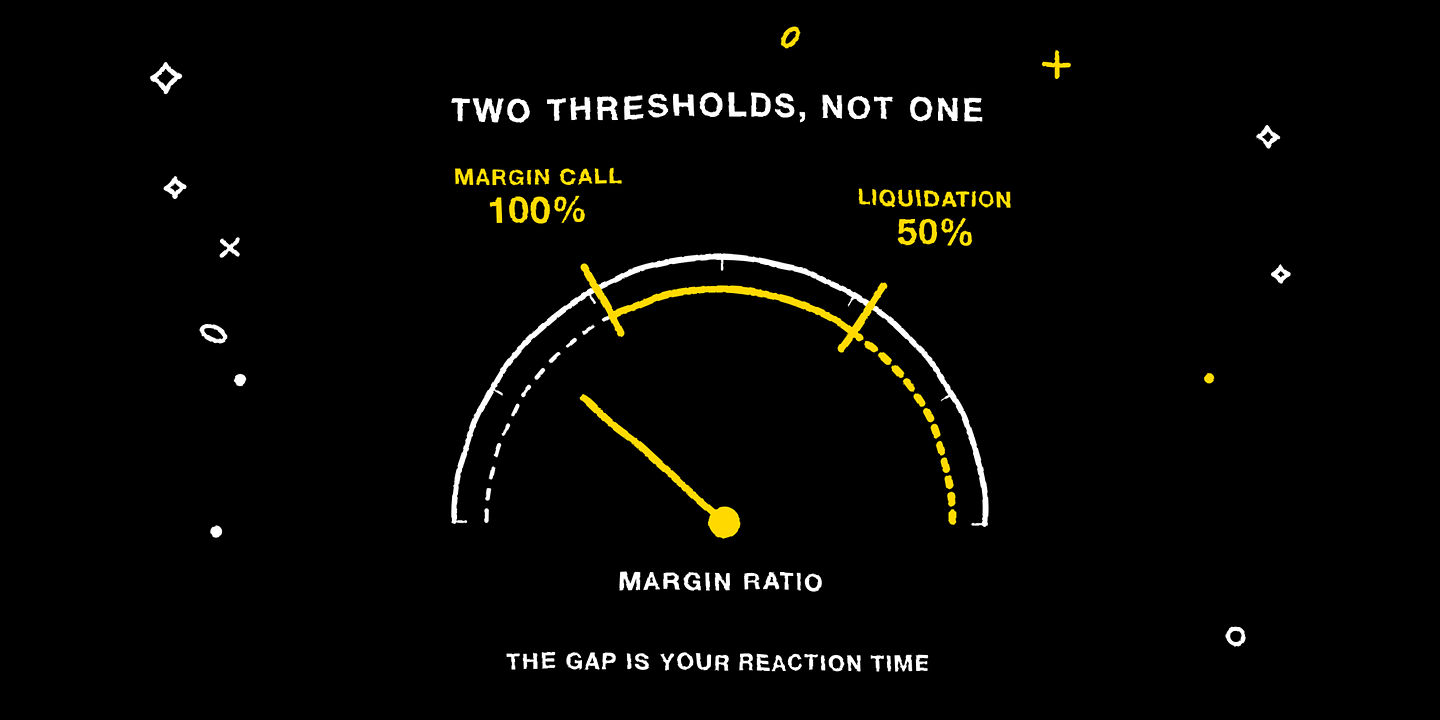
MC Markets' liquidation has two stages with a buffer in between, giving you time to react. The criterion is the margin ratio — the ratio between your account's assets and the margin required to maintain the position. Think of it as a car's fuel gauge:
First threshold: the margin ratio falls below 100%, and you receive a Margin Call. This is the fuel gauge turning yellow. The system sends an alert telling you “the deposit is running low,” but it won't touch your position yet. At this point you have three choices: transfer in more funds, reduce the position, or close it manually.
Second threshold: the margin ratio falls below 50%, triggering forced liquidation. This is the engine stalling. The system starts the liquidation process, and control of the exit is no longer in your hands.
The distance between the two thresholds is the reaction time the platform leaves you. The smartest approach: don't wait for the yellow light — deal with it before the margin ratio approaches 100%.
3. Why Judge by the “Mark Price” Instead of the Last Traded Price?
Liquidation triggers on the Mark Price, not the last traded price. The mark price is a fair reference price the platform computes by combining multiple data sources.
Why not the last traded price? Imagine your neighborhood's home prices: they don't get marked down 30% by the bank just because a neighbor made a fire sale at 70% of value. By the same logic, a single abnormal trade can make the last price deviate from the true level in an instant — if it were used to judge liquidation, your position could be “killed by mistake” by one abnormal trade. The mark price filters out this momentary distortion.
4. How Do You Know How Far You Are From Liquidation?
Three places to check anytime: the margin ratio in your position list — your “fuel gauge reading,” the lower the number the more dangerous; the warning notification — the system proactively alerts you as the margin ratio approaches the threshold; and the estimated liquidation price — when you open a position the interface shows this position's estimated liquidation price, and when the price reaches it, liquidation happens.
5. How to Avoid Being Liquidated?
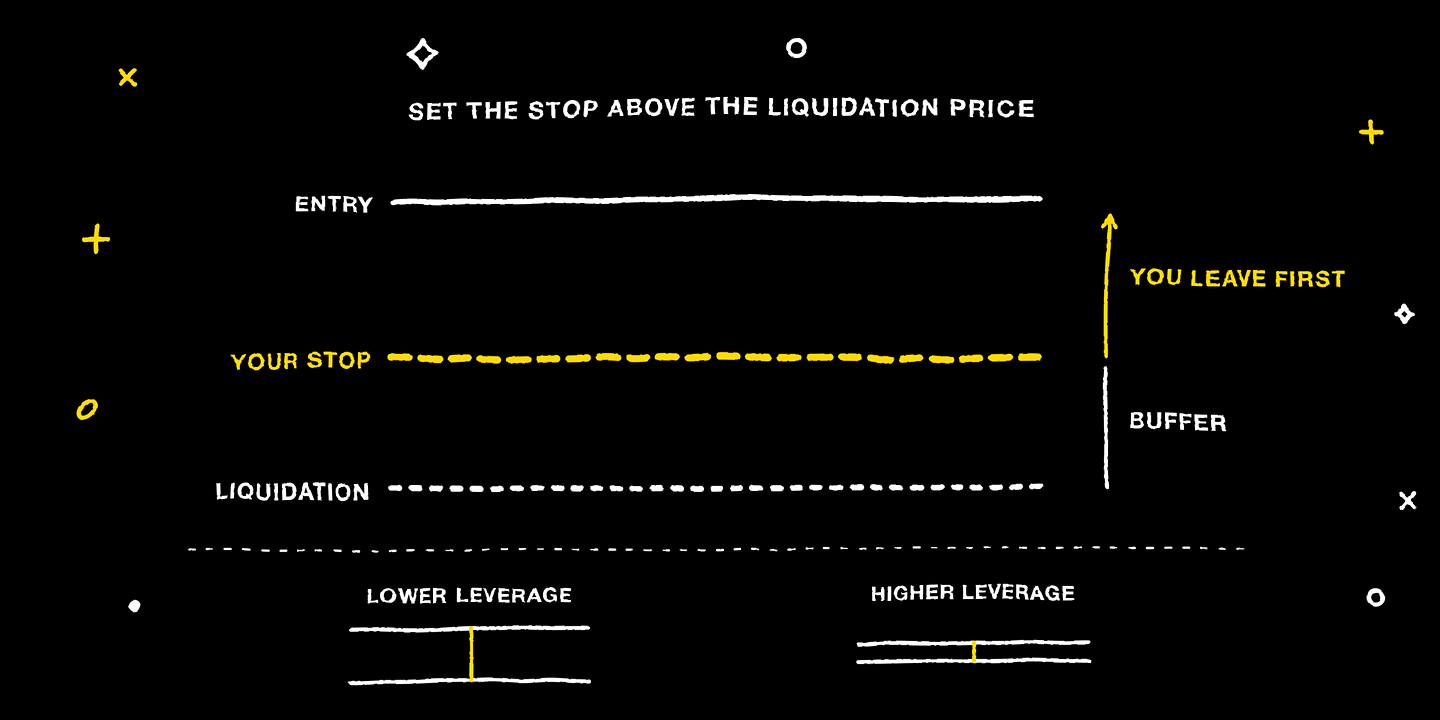
First, place a stop-loss order the moment you open the position, and set it before the liquidation price. A stop-loss is an exit point you choose yourself; liquidation is one the system chooses for you — always make sure you leave first.
Second, leave headroom on leverage. The highest leverage the platform allows is not a recommendation. The higher the leverage, the narrower the distance between the entry price and the liquidation price, and the less room there is for normal fluctuation.
Third, act immediately after a Margin Call: transfer in funds, reduce the position, or close it — pick one of the three. Leaving it alone won't shrink the loss; it only moves you one step closer to liquidation.
Fourth, watch position linkage in cross-margin mode. MC Markets defaults to Cross Margin — all positions share one pool of funds. The upside is that a single position better withstands fluctuation; the cost is that one especially bad trade can drag down the whole account.
FAQ
Q: After liquidation, will my money go to zero?
A: Liquidation closes the position, not the account. After a position is liquidated, the remaining assets in your account (if any) still belong to you. But in extreme conditions, that position's loss can approach all the margin you put in.
Q: Are a Margin Call and liquidation the same thing?
A: No. The notification is a warning (margin ratio below 100%); liquidation is the action (margin ratio below 50%). When you receive the notification, you still have full control to act.
Q: Is the available leverage the same no matter the position size?
A: No. MC Markets uses tiered, variable leverage — the larger a position's notional size, the lower the maximum available leverage. For example, crypto up to $500,000 is at most 50x, and $500,000 to $1,000,000 drops to 25x. Before adding to a position, check the live tier table on the trading-rules page.
Quick Recap
Liquidation = the system automatically closes the position when margin is insufficient. Two thresholds: a warning at 100% margin ratio and liquidation at 50%, with your reaction time in between. Triggers are based on the mark price, to prevent an abnormal trade from killing you by mistake. The best defense: place a stop-loss the moment you open, leave headroom on leverage, and act immediately when warned.
Risk Warning
The thresholds and mechanics described here reflect the rules MC Markets currently publishes and may be adjusted in the future; before ordering, refer to the latest parameters on the trading-rules page. Leveraged trading carries significant risk, and losses can exceed your initial capital. Only trade with funds you can afford to lose.
Further Reading
How to Use Market, Limit, Stop-Loss, and Take-Profit Orders? A Complete Order-Types Guide
How Are MC Markets' Fees Calculated? A Full Rate Table for Standard, Advanced, and VIP Discounts
Disclaimer
This article is for general informational and educational purposes only and may not apply to the regulations or products available in your region. It does not constitute investment, financial, or trading advice of any kind, nor an offer, solicitation, or recommendation to buy, sell, or hold any digital asset.
Trading digital assets involves high risk, prices can be extremely volatile, and you may lose all of your invested capital. Leveraged trading can result in losses exceeding your initial deposit. Past performance is not indicative of, and does not guarantee, future results.
You should make investment decisions independently based on your own financial situation and risk tolerance, and consult a licensed professional adviser where necessary. While we strive to ensure the accuracy of the information in this article, MC Markets accepts no liability for any errors or omissions, or for any loss you may suffer from using or relying on this information.
No more